Plant cell culture in beauty: Cécile Jonchier on the science behind the technology
Can you tell us about your career in biotech and what your role as Croda’s R&D Manager for biotech actives involves?
I've worked at Croda for 21 years. My first role was working on bacteria, fungi and yeast to develop processes to produce actives from fermentation.
Today, my responsibilities include not only the development of actives from biotech but now I also manage plant extraction, chemical synthesis, formulation and analytical teams across the globe.
This means I’m not in the lab anymore. Instead, my time is spent managing more than 50 projects, allocating resources and working with the commercial team to understand which projects have the strongest innovative and commercial potential so we can provide the resources and people to drive these projects forward.
What part of your role in biotech and, particularly plant cell culture in beauty innovations excites you the most?
What excites me is that biotechnology and plant cell culture is an ever-moving space. There are always new ideas and new things to discover.
Plant cell culture was not originally developed to produce new molecules; it was developed to save plants that were endangered or susceptible to viruses.
However, through this initial work, scientists found so much inspiration from how plants do things in the natural world. For example, plants readily adapt to different environmental factors, and they also have smart ways to defend themselves from insects or disease.
Now Croda is using this understanding to create new biotech processes and molecules inspired by nature to help our customers create formulations that push the boundaries of what is possible in beauty, skin and hair care.
Can you tell us about the biotech behind plant cell culture?
Plants have a superpower. They naturally want to regenerate. If you cut grass, for example, it will grow again.
Croda uses this natural capability to create molecules of interest. And the good thing is, a single cutting from one sample of a plant is enough for what we need.
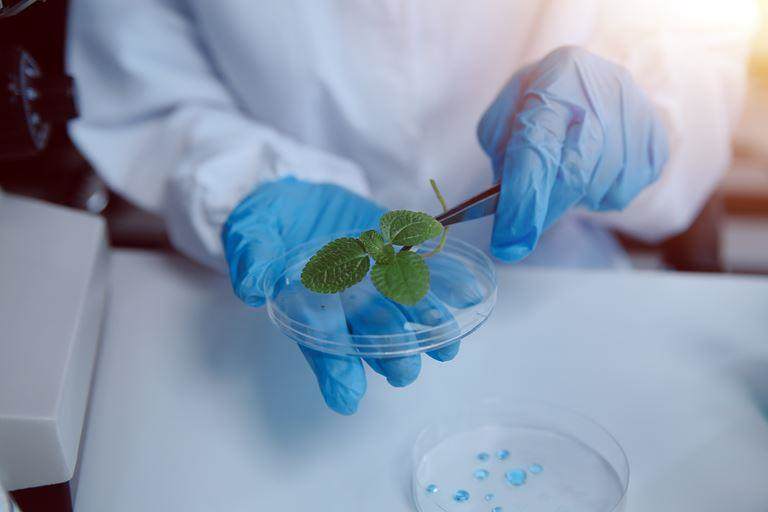
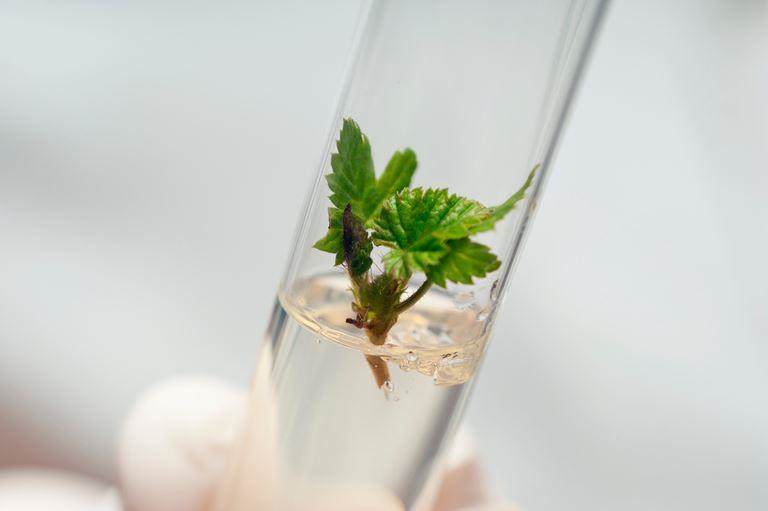
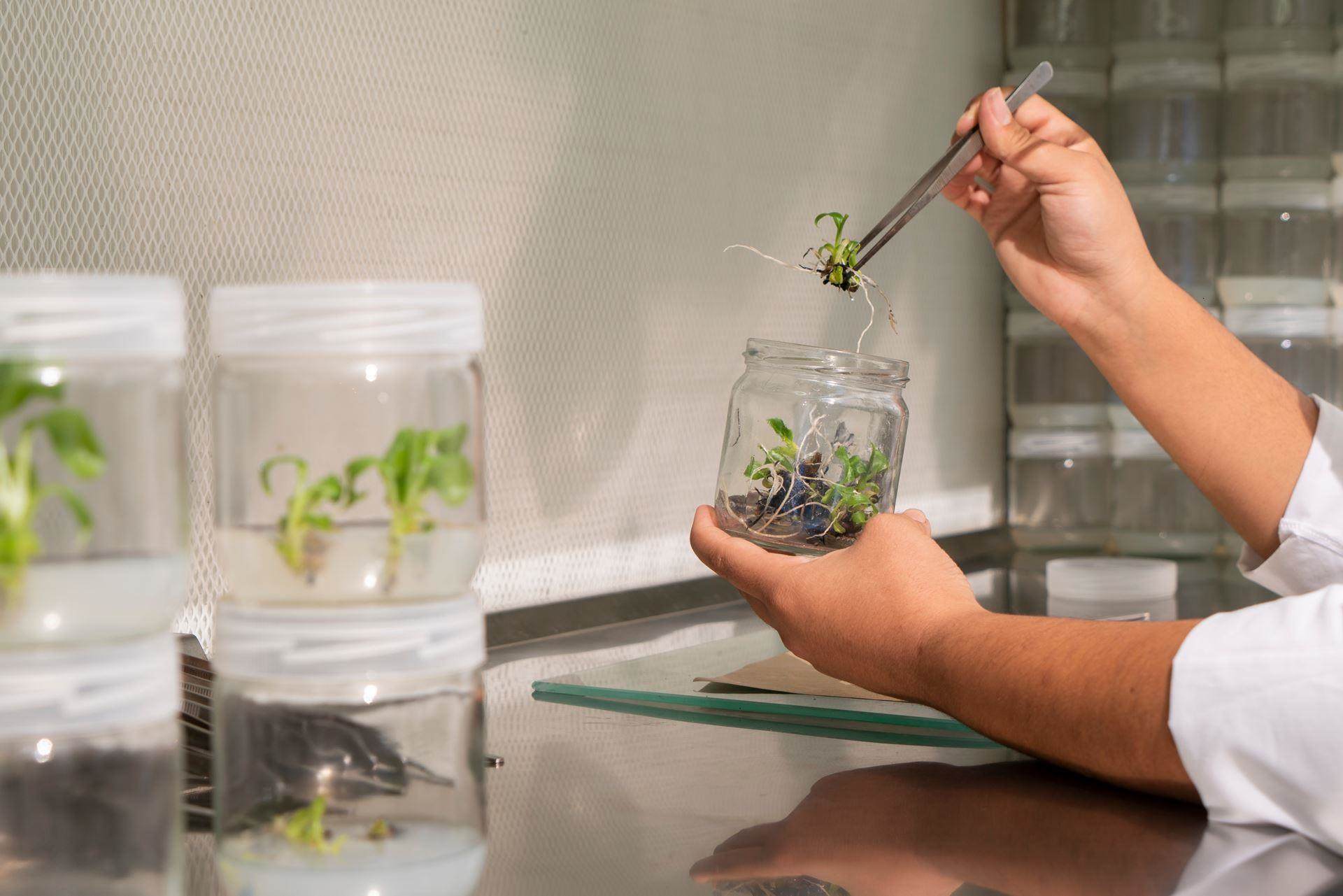
In plant cell culture, we take a cutting and put it on a specific medium in maintained conditions with hormones that prevent it from forming a new plant.
If you take a leaf cutting, for example, the plant will want to regenerate the leaf. If it’s stopped from doing that, it regenerates into dedifferentiated cells. These cells have no phenotypes. They are not a leaf or root or a stem; they are totipotent.
This means if we want to produce molecules found in a leaf, we can. If we want to produce molecules found in the plant root, we can, because these cells have the same genetic potential as the plant itself.
These undifferentiated cells are grown in a callus, which is a big quantity of undifferentiated cells. Once defined, this will allow us to produce the molecule of interest we want to obtain in the quantities we need.
There are three generations of plant cell culture. Can you explain the differences?
The first generation of plant cell culture was based on the production of a large quantity of undifferentiated cells and the extraction of primary molecules routinely produced by these cells.
The second generation of plant cell culture pushes the biomass to produce something different, using the stress response of the plant. Through a process called elicitation, we trick the plant’s metabolism into thinking it’s undergoing an insect attack, for example, or experiencing extreme temperatures or being deprived of nutrients to increase the plant’s production of our desired compounds or molecules of interest.
The third generation of plant cell culture is focused on the totipotency of the plant cell. Some plants have large genetic potential, but they don’t use it because it’s not needed in nature. This means the genes linked to this potential are completely locked.
Our objective at Croda is to unlock these genes to create new innovative actives inspired by nature and pushing nature forward.
To do this we use bioconversion, where we give the plant cells a substrate which it transforms into derivatives that the plant wouldn’t normally make, with properties our actives wouldn’t normally be able to achieve in nature.
A great example of this is Mel[o]stem™ which we produce from the leaves of Monarda didyma (also called Oswego tea). Using patented technology, we’ve created a bioactive ingredient that supports the healthy function of melanocyte cells which produce melanin. This plant cell culture-derived ingredient works to reduce uneven skin tone caused by UV exposure including light and dark pigmentation spots on the skin.
What do you think are the core drivers behind the increasing demand for green biotech and cosmetic ingredients from plant cell culture?
The main driver is sustainability, biotech is the perfect answer for the increased demand for natural ingredients.
We are seeing more and more customers seeking out green ingredients. They understand that the science we use to create plant cell culture ingredients means we use a small number of plants to grow large quantities of ingredients. And we can do it all in a lab.
Will we see more Croda ingredients created using biotech and plant cell culture?
Croda uses a lot of incredible technologies like plant cell culture, fermentation, synthetic biology and chemical synthesis to name just a few.
Our objective is always to choose the best technology to provide our customers with the optimised solution to meet their needs.
We don’t use plant cell culture just for plant cell culture’s sake. We use plant cell culture because it offers the best advantages and the best solution compared to other technologies.
We want to push biotech, and we will have more biotech ingredients in our portfolio because of the innovation they can provide. But that does not mean forgetting all the other technologies available to us.
What does the future hold for biotech ingredients derived from plant cell culture?
At Croda, we’re known for innovation, and we need to think about the innovation of tomorrow, and even after tomorrow. That means anticipating what that future looks like and working on it now, so we can develop more innovative molecules to be ready to meet those emerging needs.
How do you see the market evolving as we head towards 2030 and beyond?
For plant cell culture, the focus will continue to be sustainability.
Green biotech is also an expensive technology, which explains why it’s mainly used in pharma and premium cosmetic ingredients. At Croda, we’re looking at ways to reduce production costs by investing in new equipment and working to increase our production capabilities.
We’re also working to ensure our research and development is more agile. Today’s market is very quick, it’s forever changing. And that can be complicated when you’re doing new R&D and need to stay in line with the market. New technologies like biotech can help us do that, by allowing us to be as innovative, flexible and agile as the market is.
As a result, we don’t have to take up a huge number of hectares to grow crops. We don’t have to use pesticides or large amounts of water. And because the actives are produced under very controlled conditions, the quality is not impacted by environmental issues or bad harvests or seasonality, so there are no issues with the ingredient’s supply chain.
What is Majestem®?
What is Mel[o]stem™?
Explore the science
What is plant cell culture?

The future of biotechnology in beauty: Frederic de-Baene on engineering biology
